








At first glance, the gallery was still. Yet beneath its quiet surface, something lingered, fragile, unseen, and persistent. In the Presence of Absence, curated by Ruqaiya Mazar at Stal Gallery, ran from 24 May to 10 June 2026 and unfolded as a spatial meditation on memory, loss, and the invisible traces left behind by what was no longer present.
Bringing together works by James Wagstaff, Khadija al-Maamari, Bashair al Balushi, Ali Wagar, and Nouf al Jabri, and many more brilliant minds. The exhibition resisted fixed meaning. Instead, it opened a threshold where remembering and forgetting overlapped, where absence was not emptiness but a form of presence that continued to resonate.
The exhibition invited visitors not only to observe, but to enter physically and emotionally. One immersive installation spread woven fabric across the floor, encouraging visitors to remove their shoes and walk across its surface. Movement became reflection, and touch became a way of reading memory.
Elsewhere, video works played through headphones created intimate, isolated listening experiences. Voices emerged softly in the ear, turning the gallery into a space of private encounter within a shared environment.
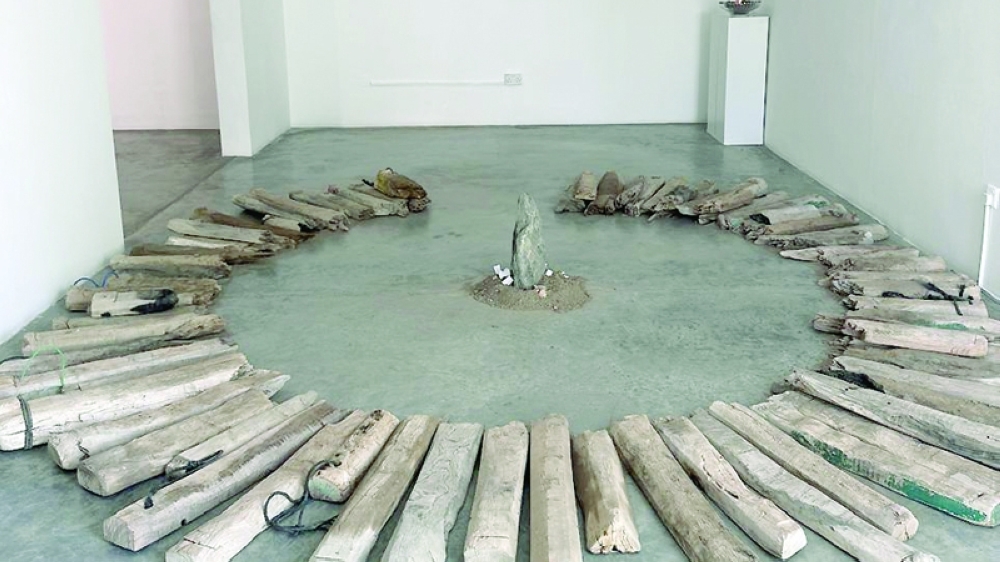
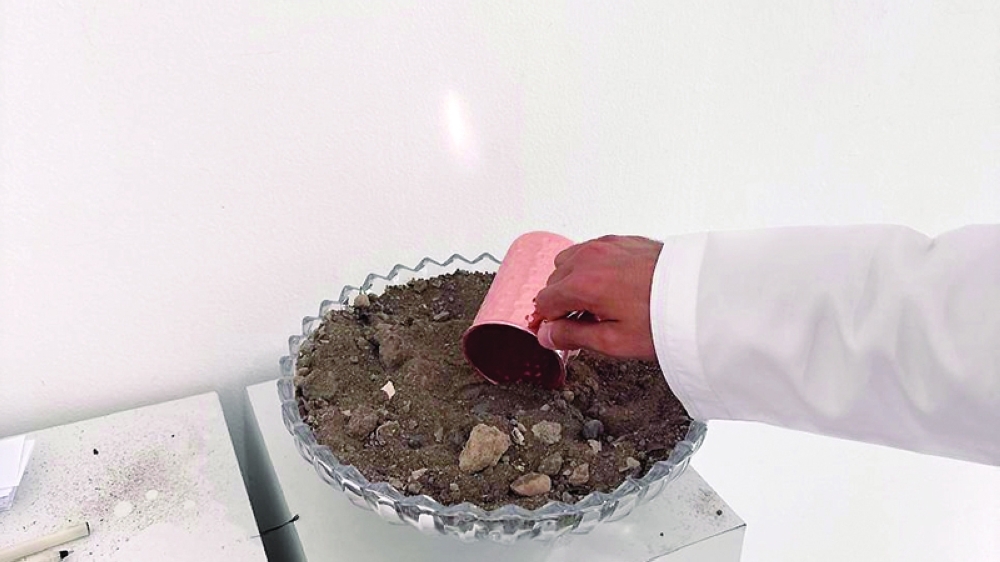
At the centre of the exhibition was a participatory burial-ground installation. Visitors were invited to write down something they wished to release. Using a copper cup, they buried their words beneath soil, transforming personal memory into a collective ritual of letting go. What was hidden became part of the work itself.
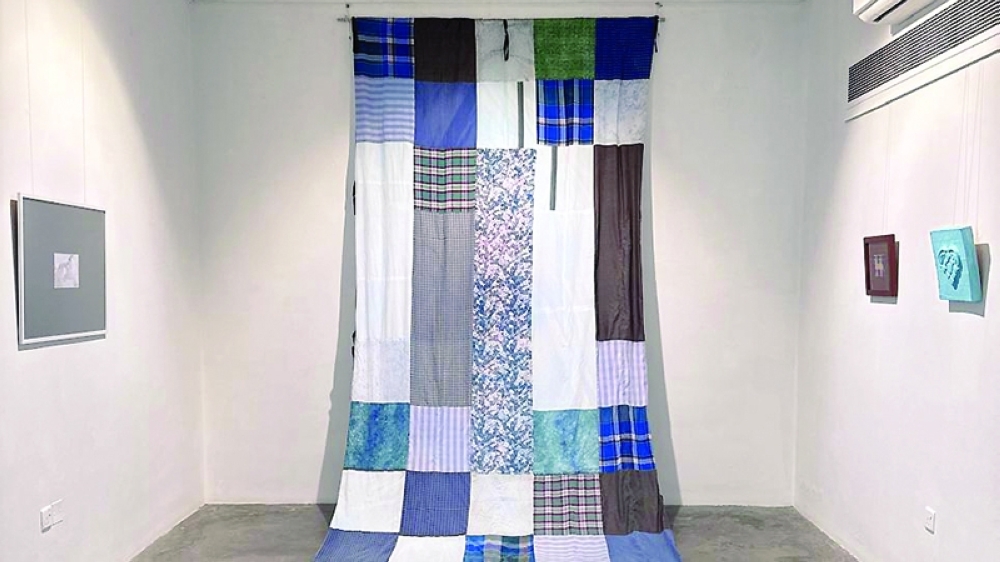
In Patina, Ali Wagar constructed a layered archive of mixed textiles, ink, paint, and video. The work reflected on nostalgia for earlier versions of the self, gathering personal artefacts and emotional residues. These fragments became carriers of memory, holding traces of people, places, and past emotional states. The piece extended an ongoing exploration begun in 2024, where material became a vessel for what time could not fully erase.
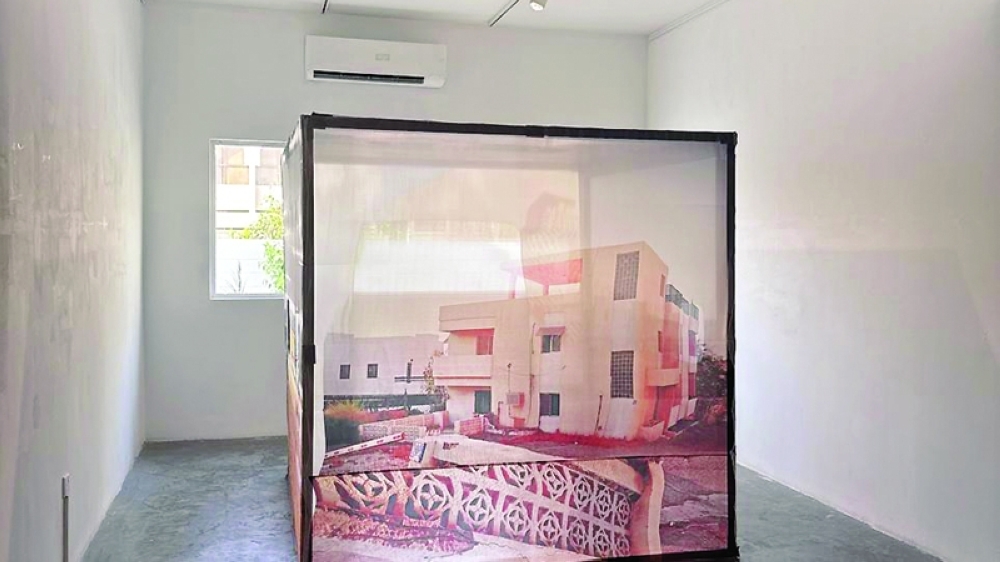
Bashair al Balushi presented Takhali (Places), a photographic archive of abandoned spaces and discarded belongings. Her lens lingered on what had been left behind, questioning the stories embedded in emptied rooms and forgotten objects. The work reflected on migration, attachment, and the fragile relationships between people and the things they left behind.
Nouf al Jabri’s Temporary House transformed construction debris into a shelter-like structure. Inspired by childhood play spaces built from leftover materials, the installation reimagined ruins as spaces of imagination. Here, shelter became temporary, and memory was built from fragments rather than permanence.
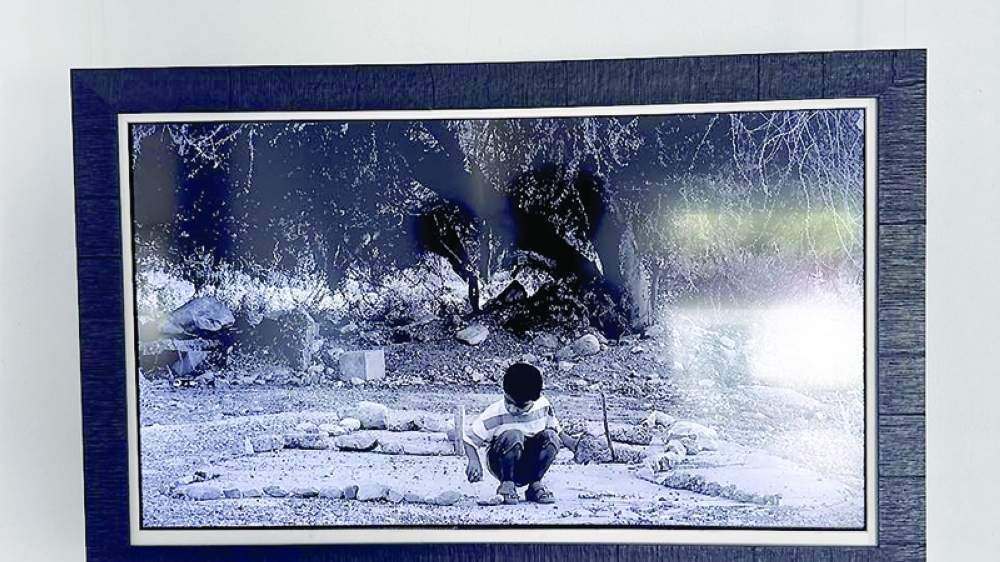
In What Wasn’t Said, Khadija al-Maamari turned to the unspoken histories of women whose experiences were never recorded in language. Through video and cyanotype prints, she explored memory as a bodily residue, something that persisted even when it could not be fully spoken. The work asked whether silence erased experience or preserved it in another form.
Across the exhibition, absence was never simply lack. It became texture, ritual, and form. Through fabric visitors walked on, soil they buried words in, and images that refused closure, In the Presence of Absence transformed memory into something active and shared.
In this space, what was gone did not disappear. It lingered, quietly, insistently, waiting to be felt again.
Oman Observer is now on the WhatsApp channel. Click here


